A Taipei Layover in Typhoon Season
Short answer. Roughly half the year is wet here: the plum rains in May and June, then the typhoon season from July into September. Rain takes away exactly three things — the observatory view, the outdoor guard ceremony and a hill climb. Everything else on a layover route works wet.
Taipei's climate does not decide whether you go out. It decides what you look at when you do, and which hour of the day you want to be doing it. This guide takes the Central Weather Administration's 1991–2020 normals and turns them into a booking decision.
What does rain actually take away?
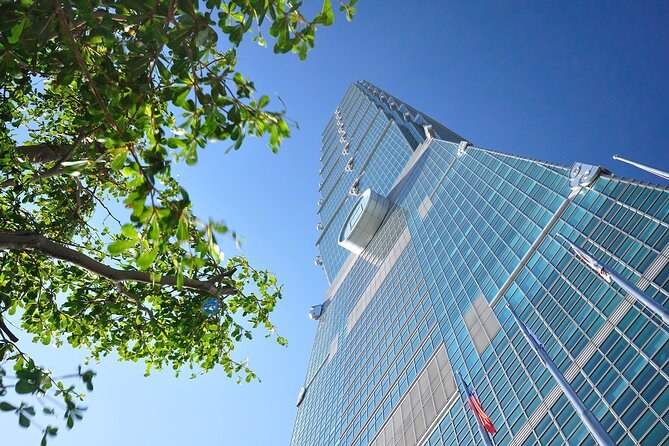
Three things, and no more. The Taipei 101 observatory is worth NT$600 on a clear day and nothing on a grey one. The changing of the honour guard at Chiang Kai-shek Memorial Hall is cancelled when it rains. The Elephant Mountain climb is a set of wet stone stairs.
What still works: every temple, the memorial hall's own exhibition floor, the arcaded shopfronts on Dihua Street, and a night market under its awnings. Three of the four standard stops are unaffected, which is why every operator will reorder a route on the day rather than cancel it.
When is the plum rain season?
May and June. Monthly rainfall more than doubles from around 100 mm in April to 225 in May and 235 in June, and the rain-day count barely moves — which means the same number of wet days carrying much heavier rain.
June is also the month with the most rain days in the year at nearly sixteen, and afternoon maxima pass thirty-two degrees. A June layover wants an indoor stop written into the route from the start.
When is the typhoon season, and what does it do?
Roughly July into September, peaking in the middle of that. What a typhoon does to a layover is not what people expect: it does not spoil the sightseeing, it removes the connection. Flights are cancelled or diverted and the Airport MRT suspends service, so the question of what to do with your afternoon does not arise.
Watch the forecast in the two days before you fly rather than the month on the calendar. A typhoon is an event with a name and a track, not a season-long condition, and most August days in Taipei are simply hot.
The wettest and driest months, side by side
| Month | Day / night | Rainfall | Rain days | What it means |
|---|---|---|---|---|
| January | 19.4 / 14.2°C | 94 mm | 13.6 | Cool, drizzly, guard change usually runs |
| April | 26.4 / 19.3°C | 101 mm | 14.5 | The last easy month before the rains |
| June | 32.7 / 25.1°C | 235 mm | 15.7 | Wettest days of the year; plan indoors |
| July | 34.8 / 26.6°C | 214 mm | 11.8 | Hottest; typhoon season opens |
| August | 34.2 / 26.4°C | 237 mm | 14.6 | Wettest month; typhoon peak |
| October | 27.6 / 22.4°C | 163 mm | 12.8 | Rainfall down a third; quietly the best |
| November | 24.8 / 19.7°C | 89 mm | 12.5 | Driest month of the year |
The full twelve months, each with three figures and one consequence, are on the Taipei Layover weather page.
Which month should you hope your connection falls in?
October or November. Rainfall drops by a third from September into October and reaches its annual low of 89 mm in November, while afternoons stay in the mid twenties. Those are the two months where a six-hour window will most likely give you the observatory view you paid for.
You rarely get to choose, of course. Knowing it changes what you book rather than whether you book. An October window is worth spending on the tower; a June one is worth spending on a market and a temple.
What time of day should you be out?
Morning, in every month from May to September. Afternoon maxima run above thirty degrees for five months of the year and above thirty-four in July and August, and the humidity behind those numbers is what turns a walk into an ordeal.
From November to March the opposite holds: mornings are grey and cool and the middle of the day is the pleasant part. In every month the guard change stops at five and the memorial hall closes at six, so an afternoon start gives up both.
How do the operators handle bad weather?
By reordering, not by cancelling. Three of these operators put the same advice in their own booking notes: bring an umbrella or a raincoat, because the weather here is hard to predict. One adds that itineraries may vary with weather and traffic.
In practice that means the wet-weather stops move to the front and the view stops move to the back or drop off. Travellers describe exactly that: one review of a rainy four-hour run says the driver kept the stories coming and let them take their time where it mattered.
Should you cancel if the forecast is bad?
Usually not. Free cancellation up to 24 hours ahead covers a forecast you can see coming on almost every listing here, so the option is there. But a wet Taipei layover loses one view and gains a covered market, which is not a bad trade for the money already spent.
The exception is a typhoon warning, and in that case the decision is made for you at the airline desk rather than by you. What each window can absorb is on short Taipei layovers.
Which month is the busiest?
Lunar New Year, which falls in late January or February. The memorial hall closes for two days over it, and much of Dihua Street's normal trade stops. The street itself becomes the city's New Year market instead, which is the busiest and most interesting week of its year.
If your connection lands in that week, the calculation reverses: a stop that is usually a quiet street of herb shops becomes the single most crowded and most alive place in the city. Check the dates against your ticket rather than assuming, because they move each year.
Does the season change which tour you should book?
It changes the route more than the product. In the wet half of the year the value sits with the operators who will reorder the day, which is most of them. It also sits with the longer windows, which have room for an indoor stop nobody planned.
| If your connection falls in | Book | Because |
|---|---|---|
| November to March | Any length | The best odds on a clear view and a dry walk |
| April | Any length | The easiest walking month of the year |
| May and June | Six hours or more | You want room for an indoor stop |
| July and August | A morning start | Afternoons run above thirty-four degrees |
| September | Six hours or more | Rainfall still high, temperatures falling |
| October | Any length | Quietly the best month here |
The one thing worth changing between seasons is the start time rather than the tour. Most of these listings let you choose it at booking.
What does the heat actually feel like?
Thirty-four degrees in July with high humidity is not the same as thirty-four degrees somewhere dry. The walking between stops is where it is felt, rather than at the stops themselves. The operators know it: three list a light jacket alongside walking shoes, because the buildings are air-conditioned hard.
Practically, that means a summer route wants fewer, longer stops rather than more, shorter ones. Two hours split between a temple and a market beats four twenty-minute walks between four monuments.
What to pack for a few hours, by season
- November to March: a light jacket. Fourteen degrees in an unheated temple courtyard is colder than the number suggests.
- April: nothing special. This is the easiest month of the year to walk in.
- May and June: something genuinely waterproof, not a shower jacket.
- July to September: the same, plus water. Thirty-four degrees with high humidity is what an afternoon looks like.
- October: a layer for the evening and nothing else.
Three operators list the same three items in their own notes: cash, comfortable walking shoes and a light jacket. Shoes matter more than anything else, because a layover here is mostly walking between short drives.
One thing worth leaving behind whatever the month: an umbrella large enough to be a nuisance. Taipei's rain is usually vertical rather than driven. The covered arcades on Dihua Street and the temple courtyards do most of the sheltering for you. A folding umbrella or a hooded layer handles the rest, and leaves you a hand for a bowl of noodles.
When is the best light for photographs?
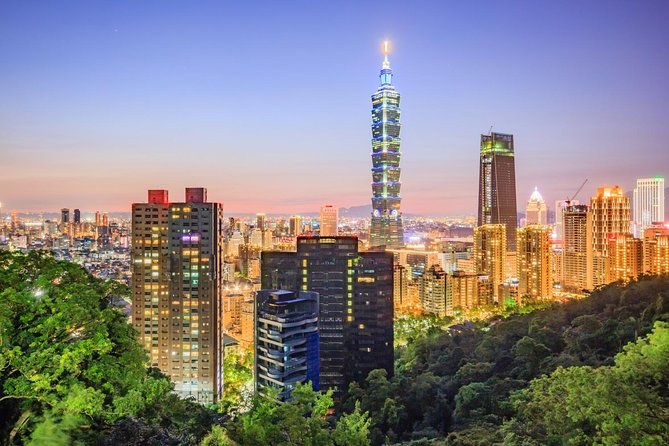
Late afternoon in the cool months and early morning in the hot ones, which is the same answer as for comfort. The skyline shot everybody takes — Taipei 101 above the basin at dusk — needs a clear evening, and October and November give you the best odds of one.
Inside the temples the light is constant and artificial, which is why they photograph well on the worst days of the year. A grey June afternoon is a bad day for the observatory and a good one for lanterns over an altar.
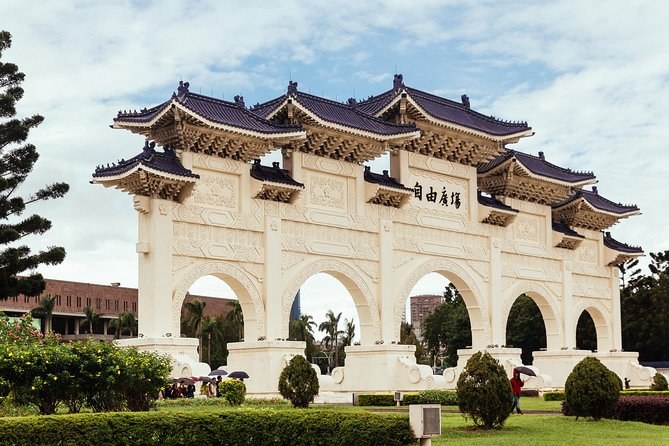
The other reliable one is the Liberty Square gate at Chiang Kai-shek Memorial Hall, which frames the hall itself through its central arch from a fixed spot every guide walks you to. It works in any weather and at any hour the park is open, which is five in the morning until midnight.
The seasonal version of the whole answer
Book the tour for the window you have, then let the month decide the route rather than the decision. October and November are the best odds; May, June and August are the months to plan an indoor stop into; July and August are the months to go out in the morning. Every departure is compared on Taipei Layover guided tours and their stop lists.
Next: the twelve months in full are on the weather page, what each stop gives you on things to do in Taipei, and every departure on Taipei Layover Tours.
Routes that work whatever the sky is doing
Highlights & Hidden Gems With Locals: Best of Taipei Private Tour
PrivateFree cancellation
From $99 per person